Home
← Back

UW Mechatronics Capstone · 2024

Anti-Sway

A gantry that moves a suspended load without letting it swing.

Read the paper
Read

The problem

Adaptable House wanted a ceiling gantry to carry people. Drive the trolley fast and the load underneath swings.

Anti-sway and tracking mode, demoed at the capstone expo.

Hardware

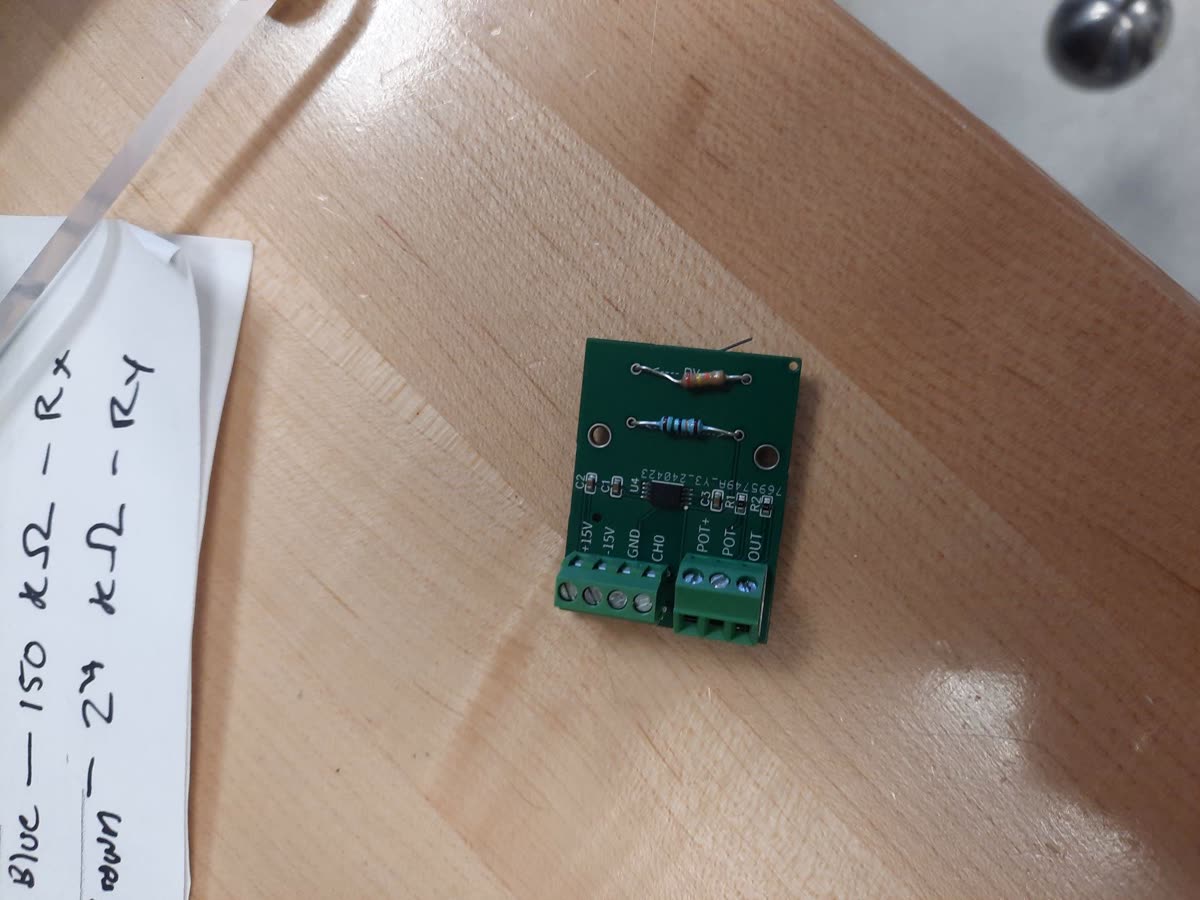
Potentiometer amplifier PCB
Pot amplifier — printed PCB, low-pass filtered.
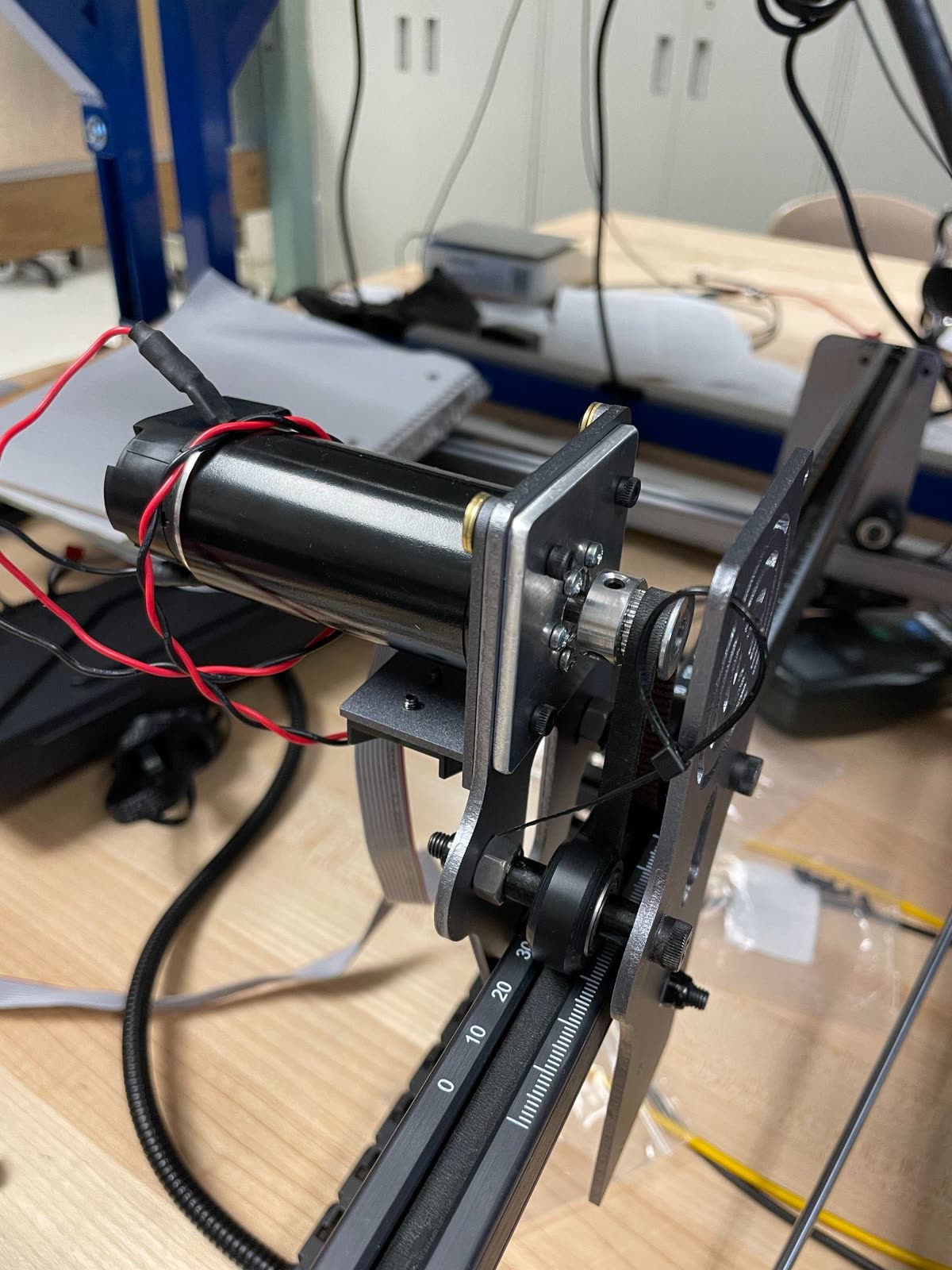
Motor and belt drive
Maxon DC motors, 2000-count encoders.
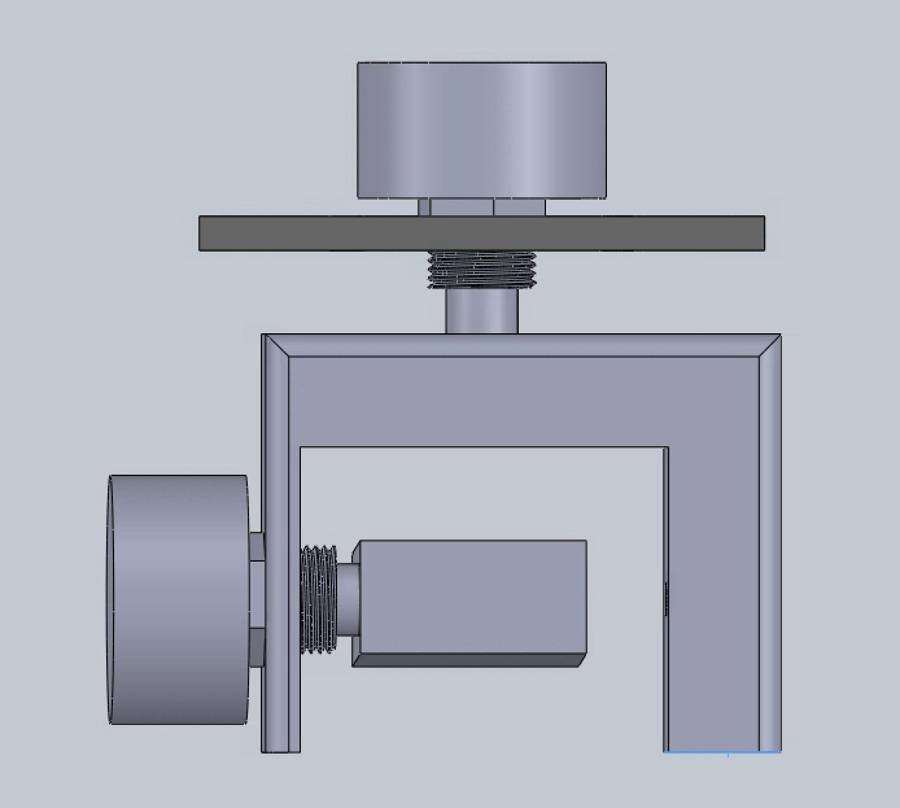
CAD of the potentiometer gimbal mount
Gimbal mount, as designed.
Two-axis gimbal carries the pots that read cable angle.
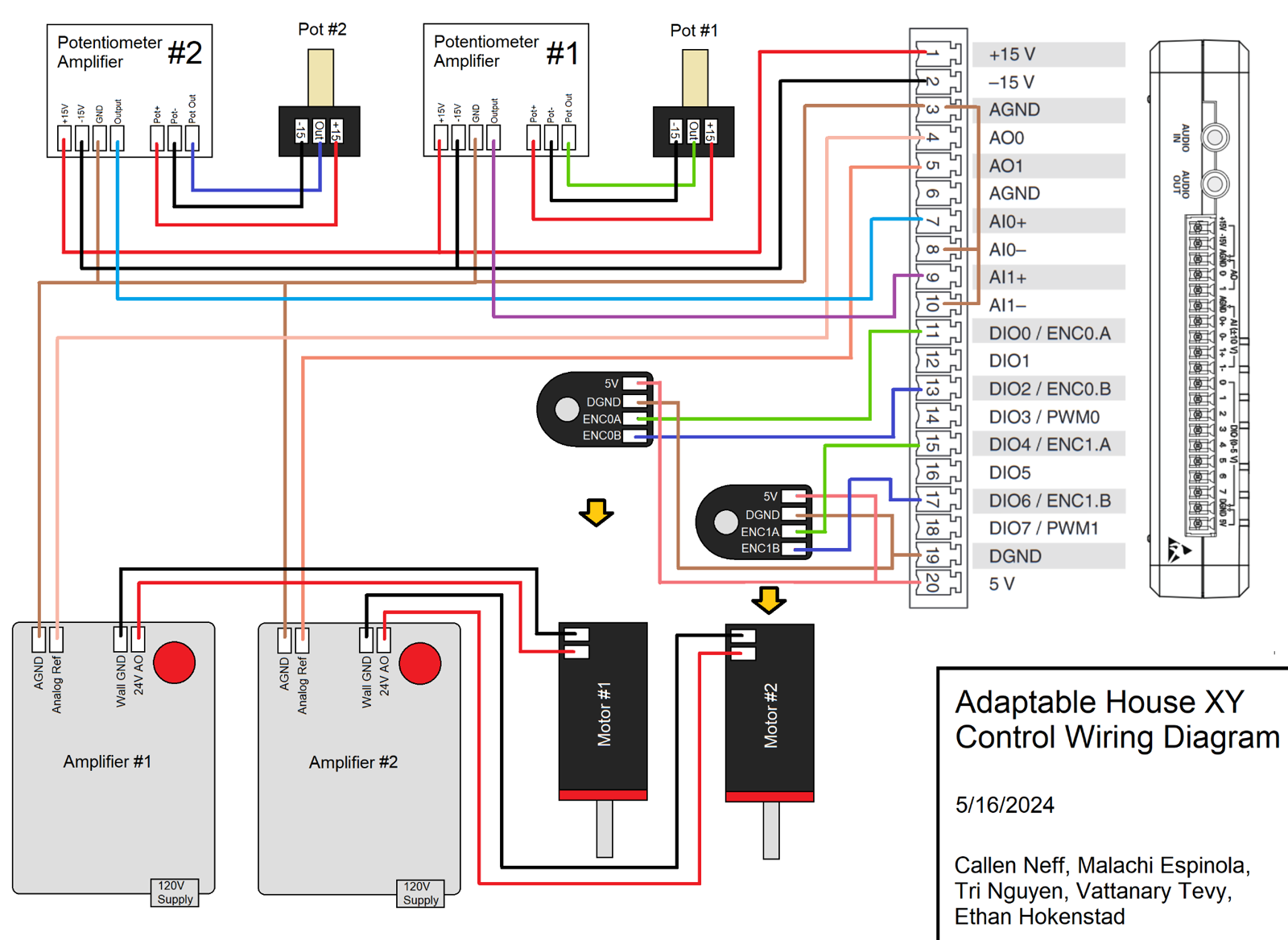
XY control wiring diagram
XY control wiring.

Model and control

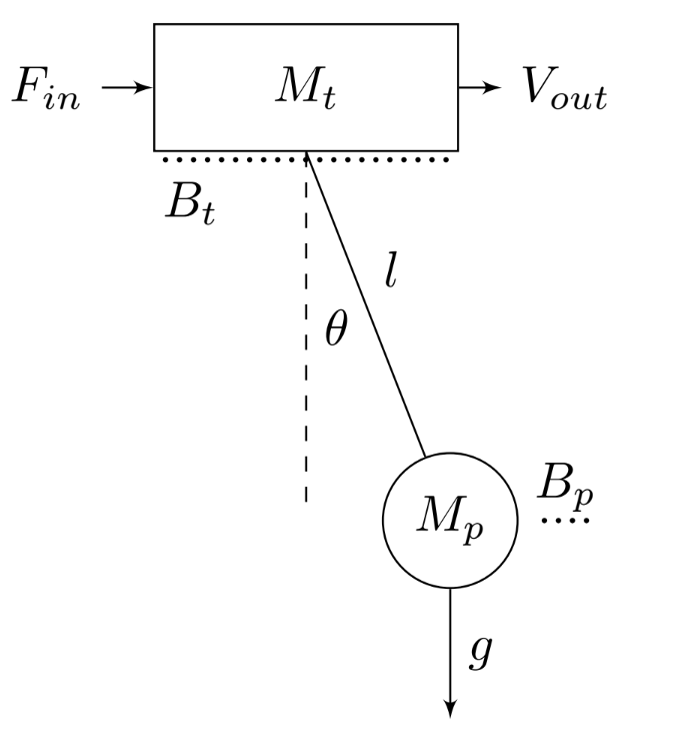
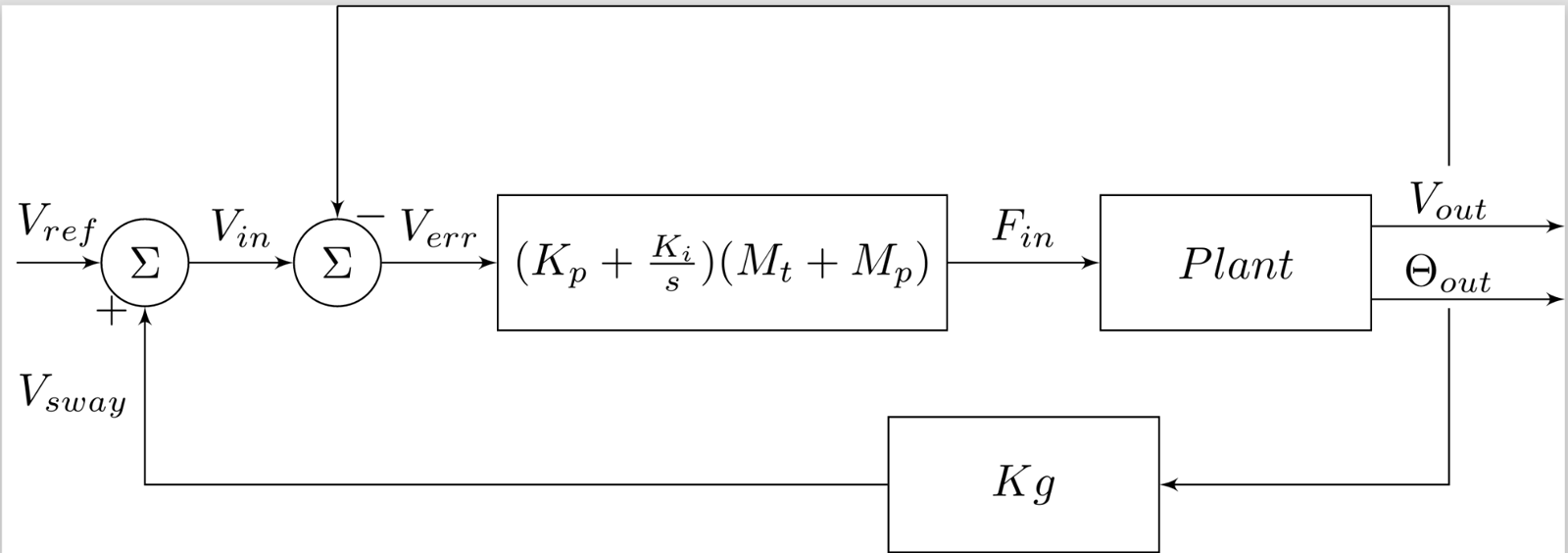
An inverted pendulum on a driven trolley, linearized with a small-angle approximation. PI velocity loop, proportional sway feedback, K = 2√(l/g) for critical damping.

Free body diagram of trolley and suspended mass
Free body diagram.
Control block diagram
Closed loop.

Simulation

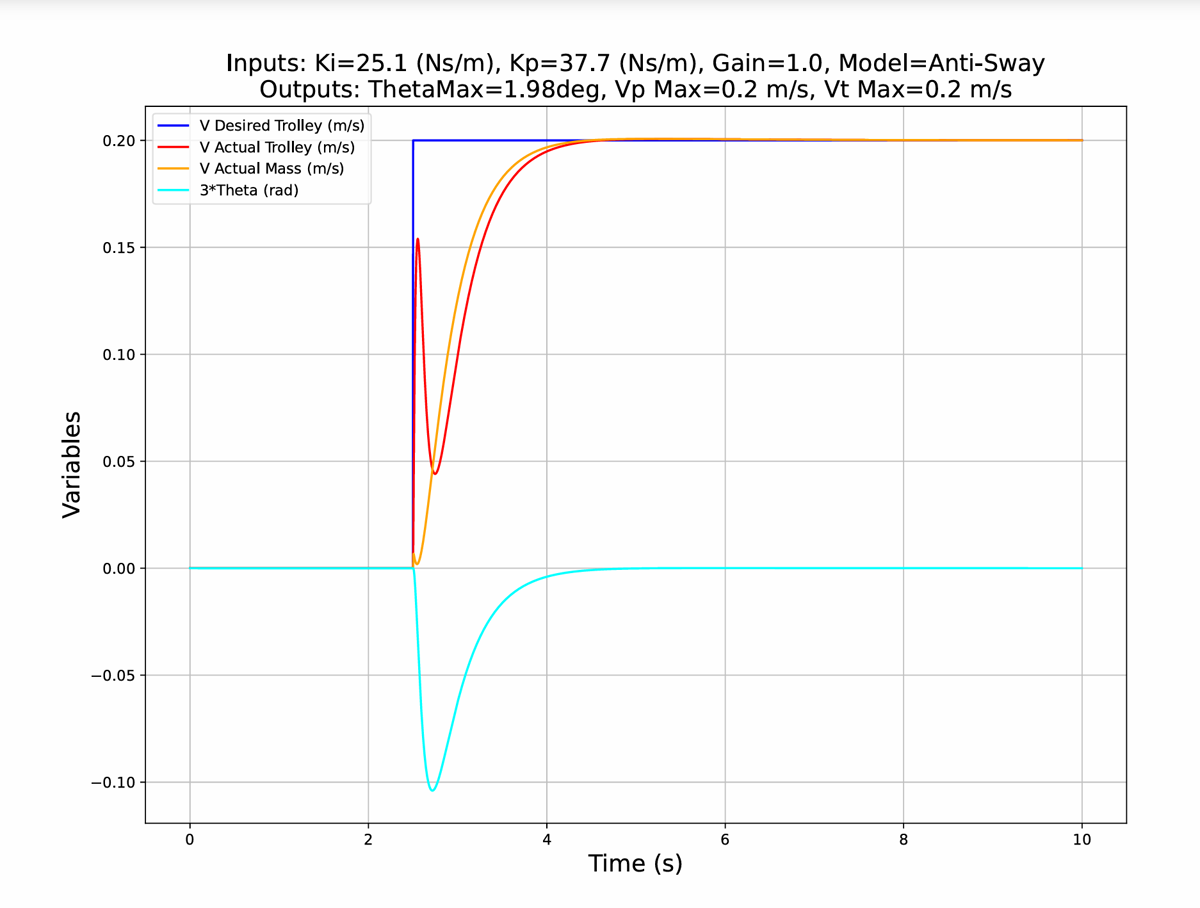
Simulation with anti-sway enabled
Anti-sway on — 1.98° peak, settles clean.
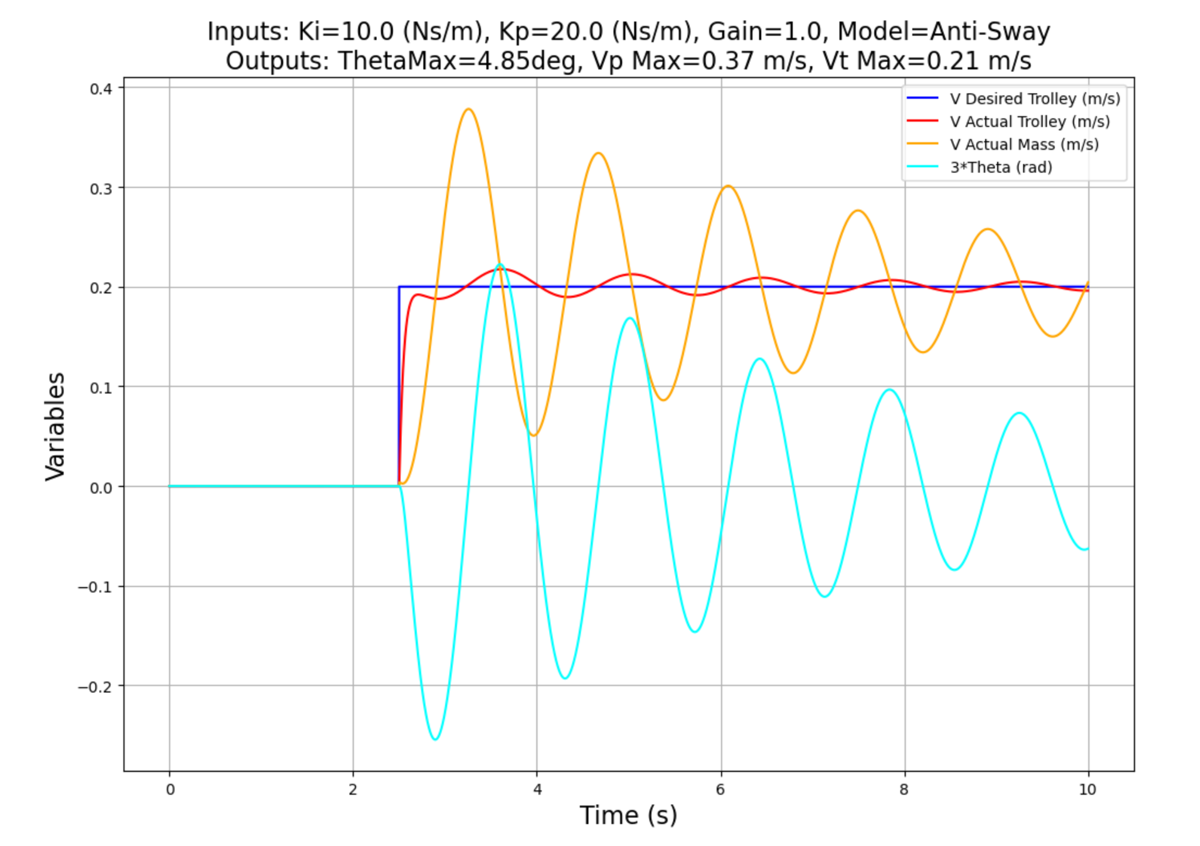
Simulation with anti-sway disabled
Off — 4.85° peak, still ringing at 10 s.

Tuning

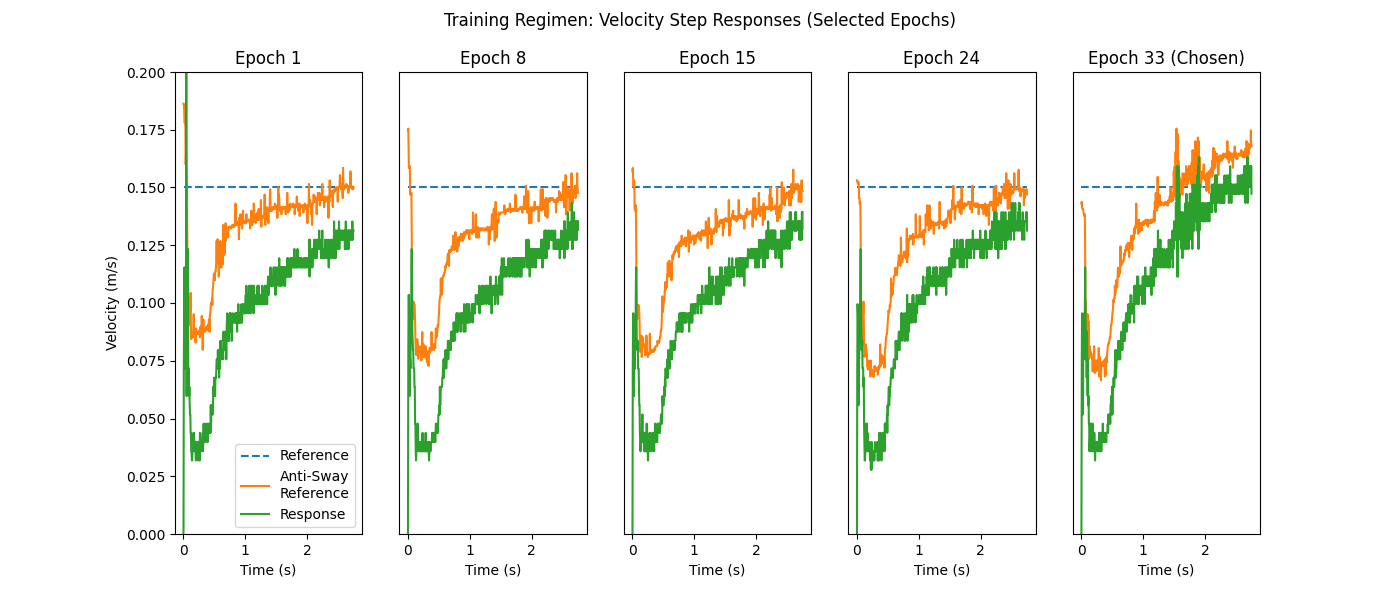
Gradient descent on the PID gains against a squared-error loss.

Velocity step responses across training epochs
33 epochs. Epoch 33 shipped.

Debugging

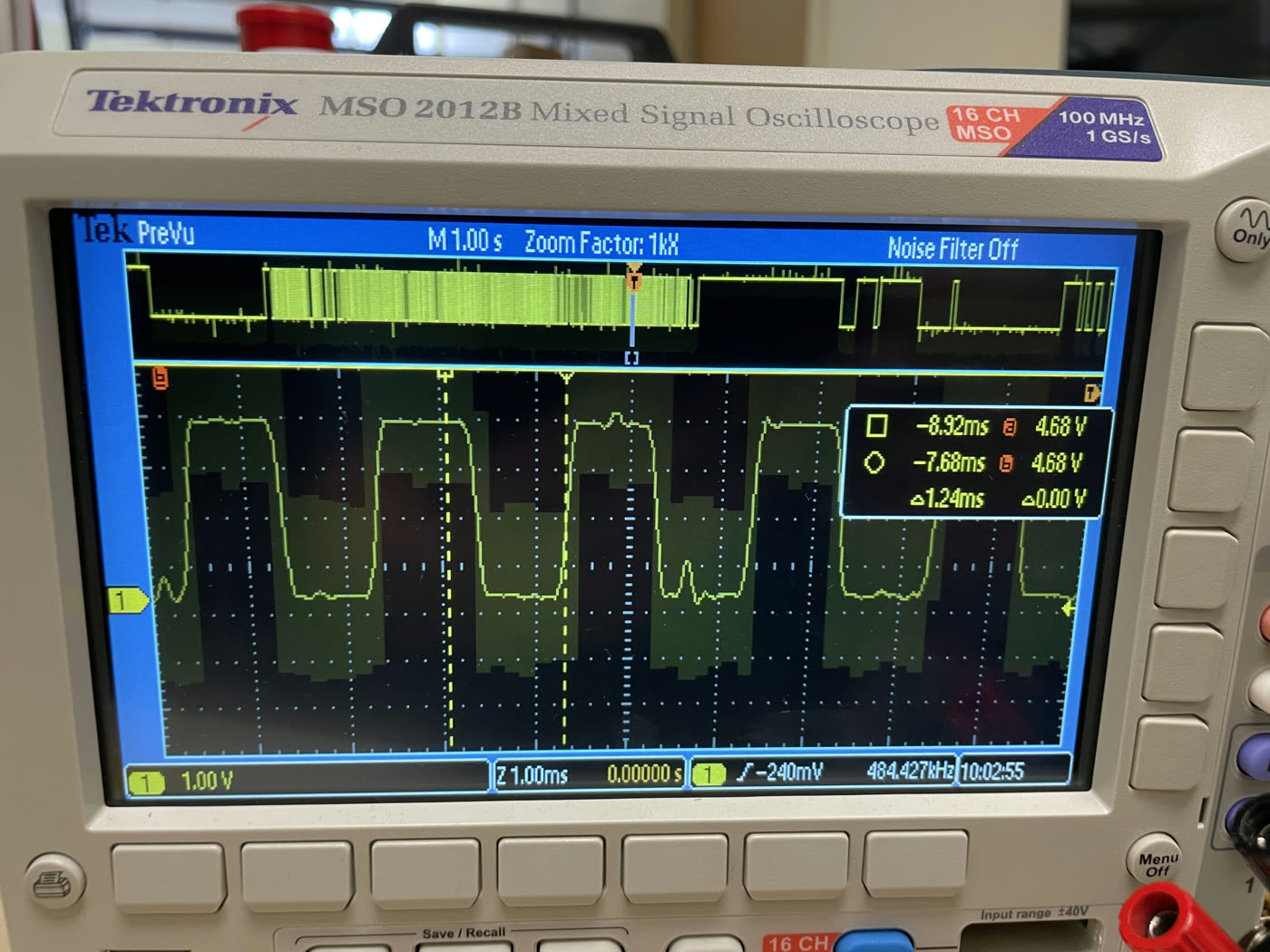
Encoders died after a few minutes of running. Noise on the lines was corrupting state transitions.
Oscilloscope trace of encoder noise
Observed encoder noise.
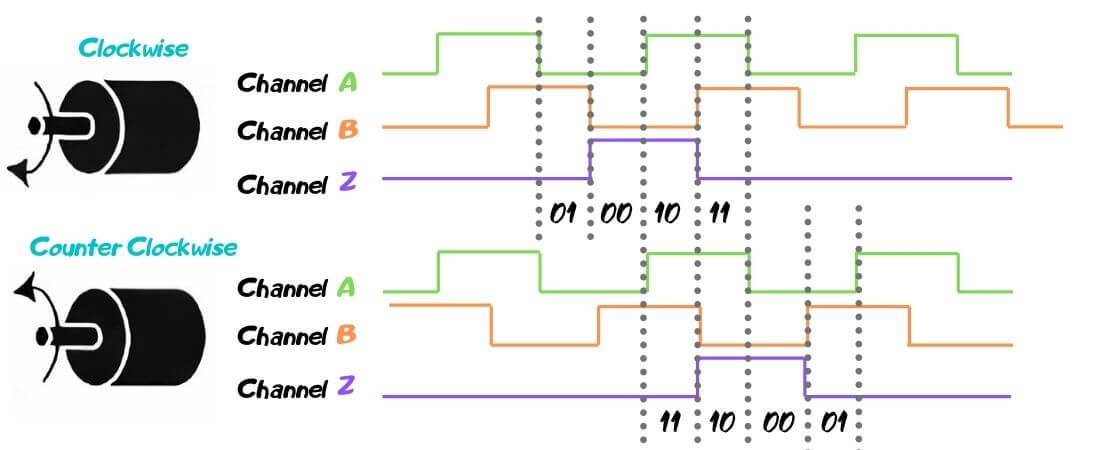
Quadrature encoder channel states
Valid quadrature transitions — noise faked invalid ones.

Results

  • 0%overshoot (req. <5%)
  • 1.45 ssettling (req. <2 s)
  • 4.3 mmsteady-state error (req. <2 cm)
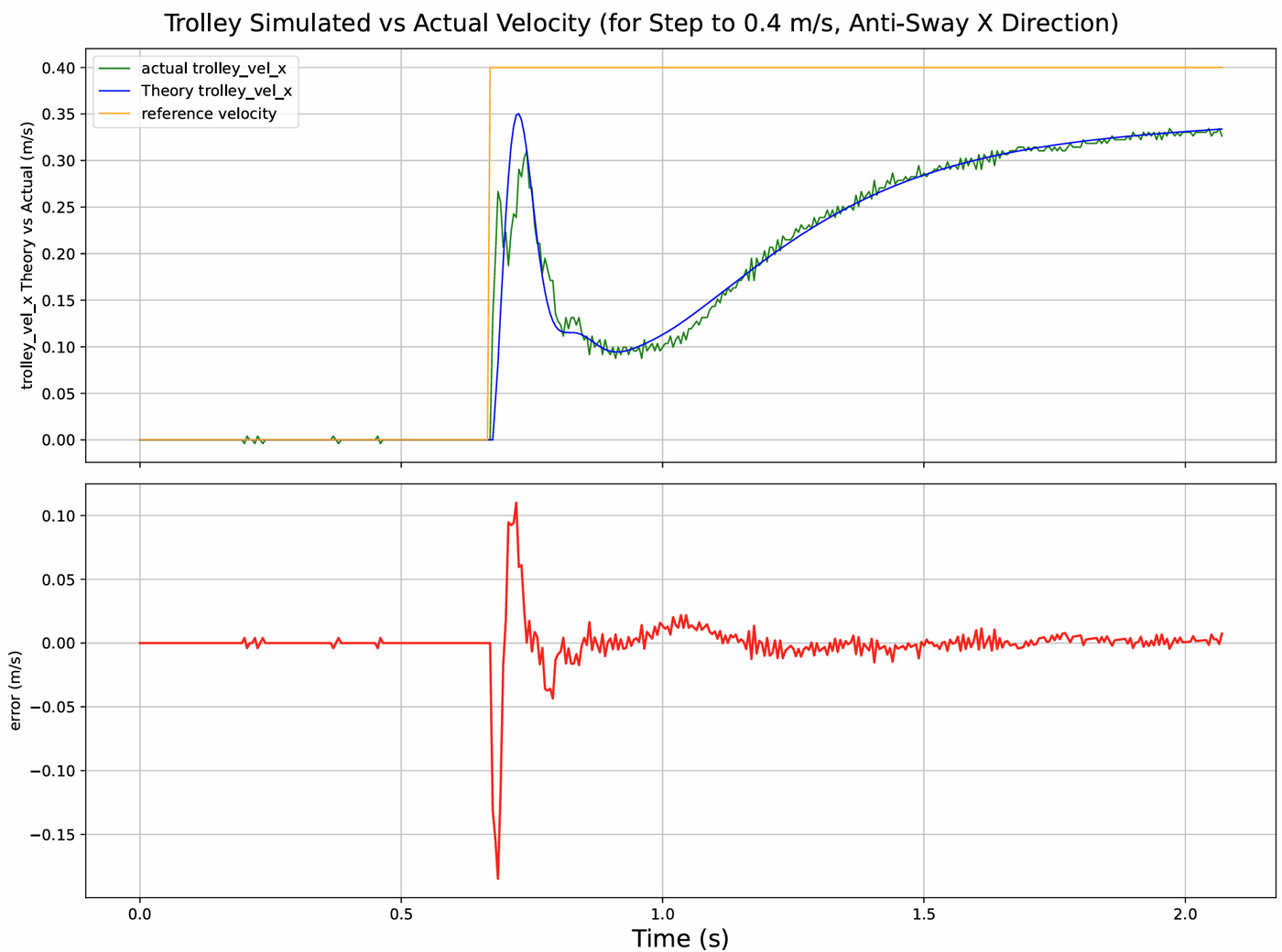
Measured versus simulated trolley velocity
Velocity — theory against actual.
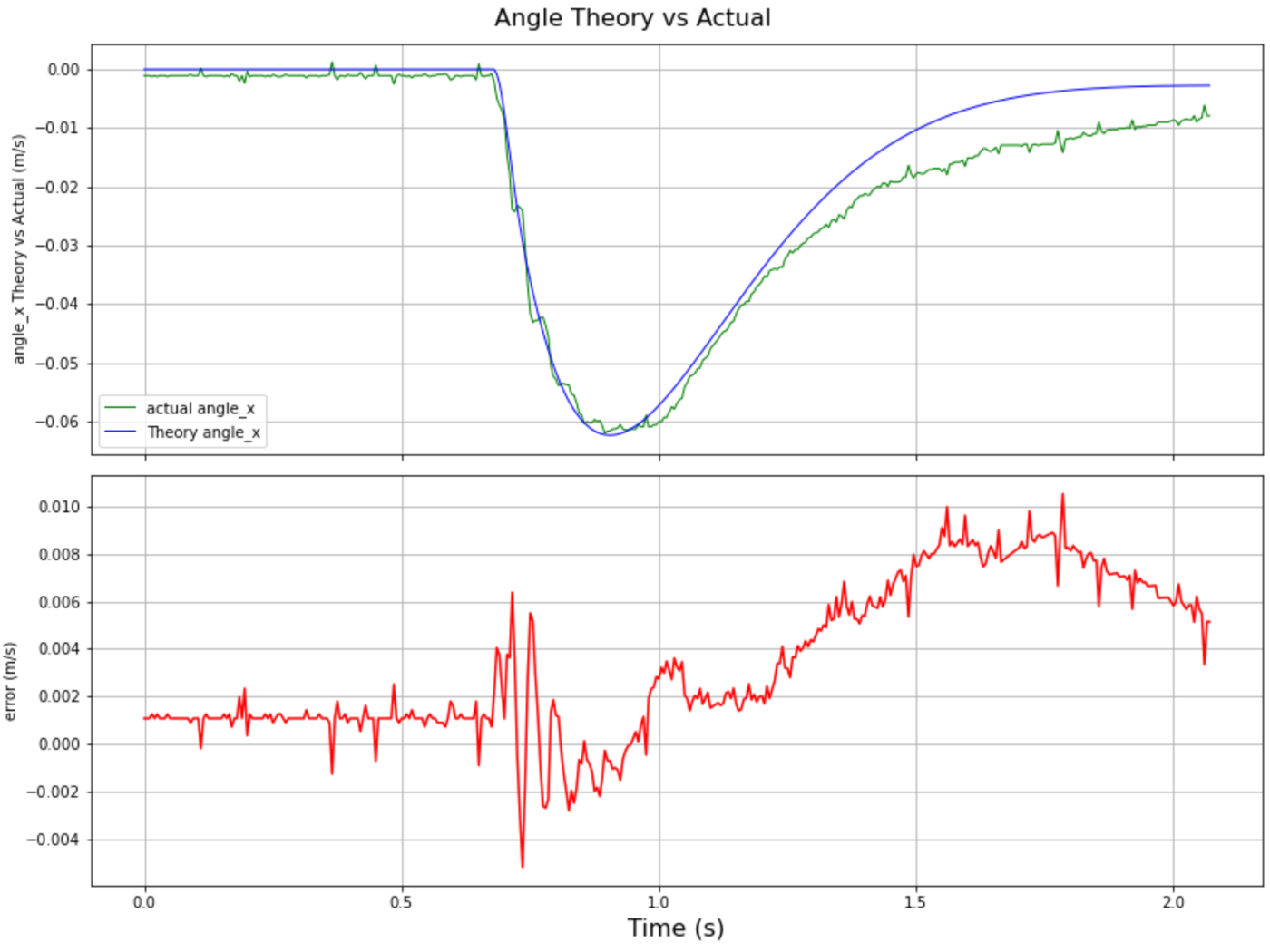
Measured versus simulated cable angle
Angle — theory against actual.

Outcome

Best design award in the UW mechanical engineering department, out of 120+ students.

← All work